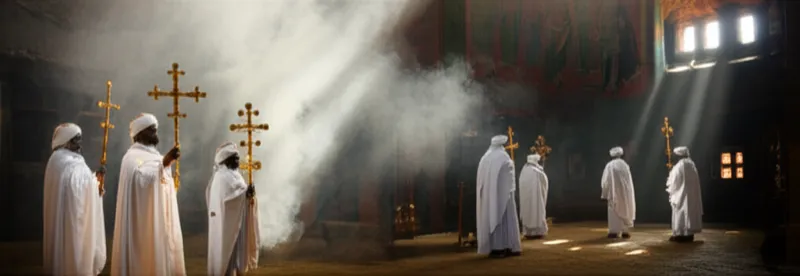
Miaphysitism — The Heart of Tewahedo Theology
At the core of Ethiopian Orthodox belief is the doctrine of Miaphysitism — the confession that Jesus Christ has one united nature (mia physis) in which the divine and human are perfectly united without confusion, mixture, change, or separation.
This is not Monophysitism, which claims Christ has only one nature (denying his full humanity). The Tewahedo Church confesses Christ as fully God and fully man — not two separate natures, but one united reality. The Ge'ez word ተዋሕዶ means "being made one" or "unity" — the sacred mystery of the Incarnation.
This doctrine was articulated by St. Cyril of Alexandria and upheld by the early Church fathers. It emphasizes the inseparable union of divinity and humanity in Christ, preserving both the mystery and the wholeness of the Savior.
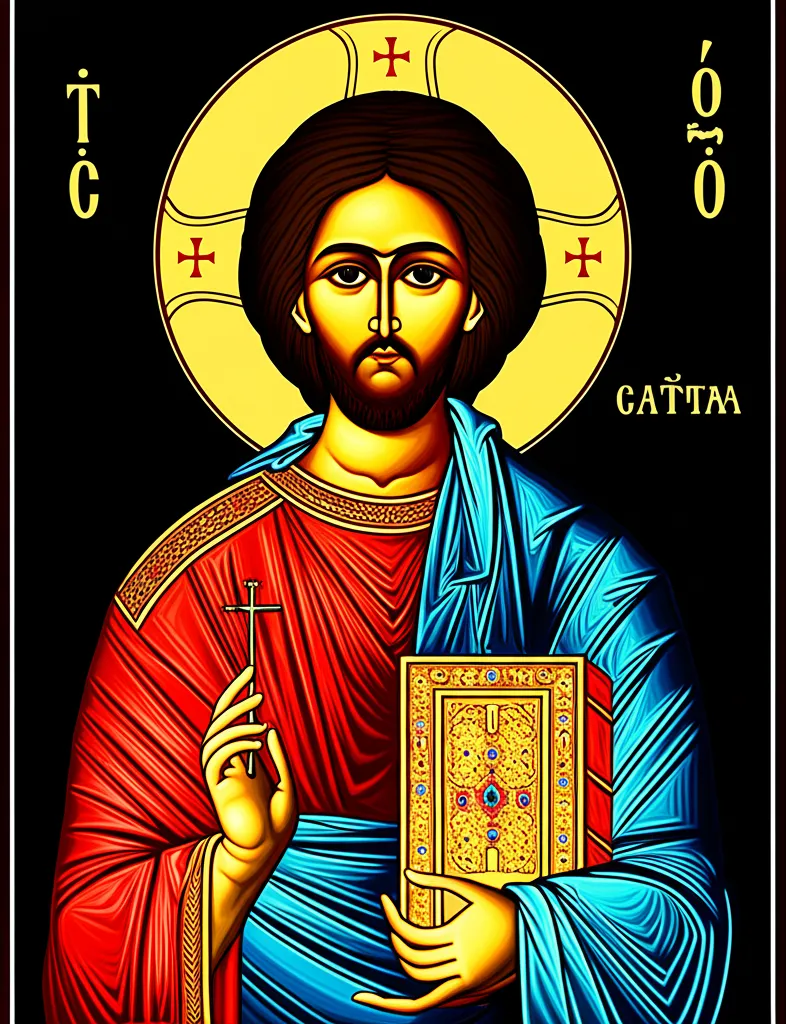
The Council of Chalcedon (451 CE)
In 451 CE, the Council of Chalcedon convened in response to theological debates about the nature of Christ. The council produced a definition stating that Christ exists in "two natures" — divine and human — united in one person.
The Ethiopian Church, along with the Coptic, Syrian, and Armenian Churches, rejected this formula, not because they denied Christ's full divinity and humanity, but because they believed the language of "two natures" risked dividing Christ and contradicted the teaching of St. Cyril.
This theological stance led to the formation of the Oriental Orthodox communion — a family of ancient churches including Ethiopia, Egypt (Coptic), Syria (Syriac Orthodox), Armenia, Eritrea, and India (Malankara). Together, they preserve the pre-Chalcedonian faith, standing apart from both Roman Catholicism and Eastern Orthodoxy.
Far from being a schism of rejection, this was a defense of ancient orthodoxy — the faith once delivered to the saints, guarded through centuries of isolation, persecution, and resilience.
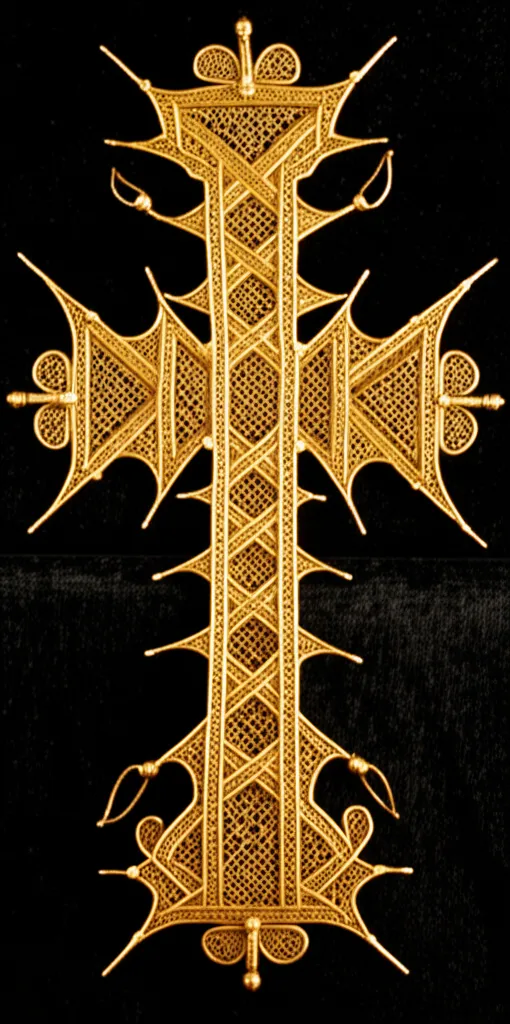
The Dual Sabbath — Saturday and Sunday
The Ethiopian Orthodox Tewahedo Church is unique among Christian traditions in observing both Saturday and Sunday as holy days of rest and worship.
Saturday is the original Sabbath, the seventh day of creation, the day God rested (Genesis 2:2-3). It is the day sanctified from the foundation of the world. The Ethiopian Church honors this ancient commandment, preserving the Sabbath rest as given in the Law of Moses.
Sunday is the day of the Resurrection, the first day of the new creation, the day Christ rose from the dead. It is the Lord's Day, the day of the Eucharist and the gathering of the faithful.
Both days are sacred. Both are kept. This dual observance reflects the Church's deep continuity with the Old Testament while fully embracing the new covenant in Christ.
Judaic Heritage — A Living Continuity
Ethiopian Christianity preserves more Old Testament practices than any other Christian tradition. This is not legalism — it is heritage, identity, and faithfulness to the whole counsel of Scripture.
The Church observes dietary laws similar to kosher practice: no pork, no shellfish, no unclean animals. Meat and dairy are not mixed during fasting periods. These laws are not seen as burdensome but as sacred disciplines that sanctify daily life.
Circumcision is practiced on the eighth day after birth, following the covenant given to Abraham (Genesis 17:12) and fulfilled in Christ (Luke 2:21). It is a physical sign of belonging to the people of God.
Women undergo purification after childbirth (40 days for a boy, 80 days for a girl), as commanded in Leviticus 12. This is not about impurity but about sacred time — a period of rest, blessing, and reintegration into the community.
Above all, the Ethiopian Church holds the sacred tradition of the Ark of the Covenant, believed to rest in Axum. This connection to ancient Israel is not symbolic — it is historical, genealogical, and spiritual. Ethiopia sees itself as the continuation of the covenant people, grafted into the vine of Israel through Christ.
The Tabot — The Ark in Every Church
In every Ethiopian Orthodox church, there is a tabot (ታቦት) — a replica of the Ark of the Covenant. It is a consecrated wooden tablet inscribed with the name of the church's patron saint.
The tabot is the church. A building without a tabot is not a church — it is merely a structure. The tabot represents the presence of God dwelling among his people, just as the original Ark dwelt in the Holy of Holies.
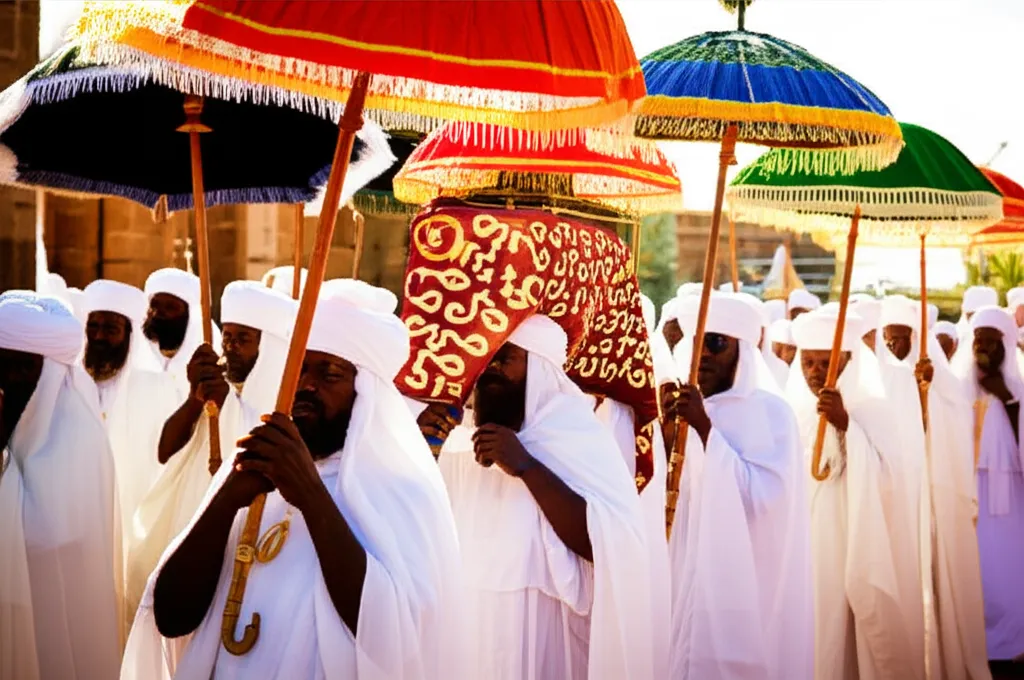
During major feasts like ጥምቀት (Timkat, Epiphany), the tabots are carried in solemn procession, wrapped in rich cloth, accompanied by priests, deacons, and the faithful. The procession recreates the ancient journey of the Ark, echoing the worship of the temple and the exodus of Israel.
The tabot is never displayed publicly. It is veiled, hidden, sacred. Only ordained priests may touch it. This reverence preserves the holiness of God — a God who is both near and transcendent.
The 14 Anaphoras — The Liturgy of the Eucharist
The Ethiopian Church celebrates the Divine Liturgy (ቅዳሴ, Qiddase) using 14 different anaphoras — eucharistic prayers that form the heart of the liturgy. Each anaphora is attributed to a different saint or apostolic tradition, and each carries its own theological emphasis and poetic beauty.
These are not variations for novelty's sake — they are treasures of the Church, ancient prayers preserved in Ge'ez, chanted in full during the celebration of the Holy Mysteries.
Each anaphora is a universe of theology, a journey into the mystery of the Body and Blood of Christ. The priest chants, the deacons respond, the congregation stands in awe. This is not a ritual — it is heaven touching earth.