Debre Damo
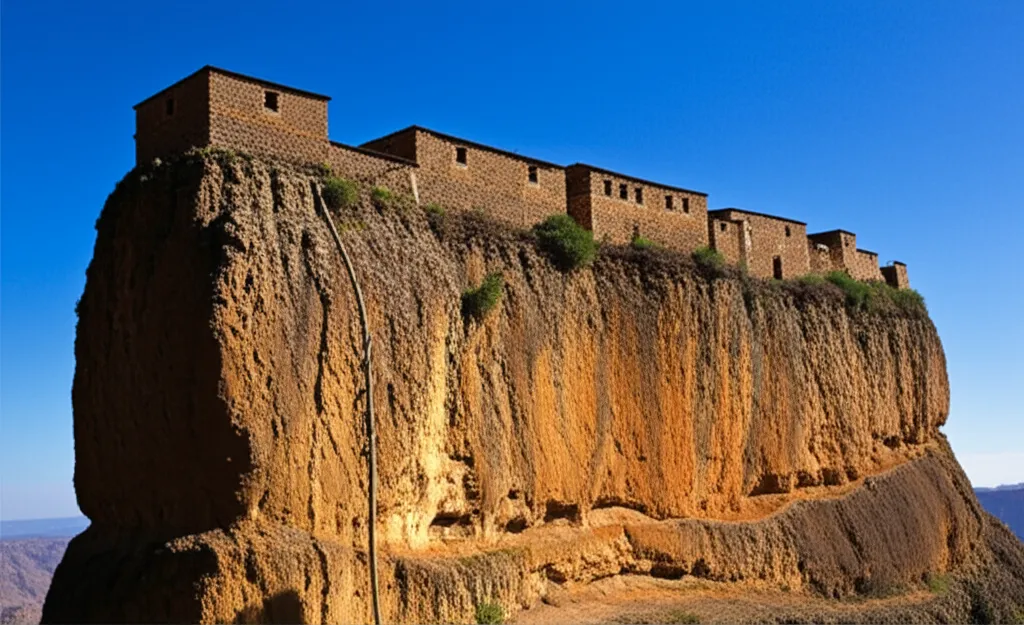
Perched atop a sheer cliff in the highlands of Tigray, Debre Damo is one of the most extraordinary monasteries in the world. The only way to reach it is by climbing a rope — a 15-meter ascent up a vertical rock face. No stairs, no elevator, no modern convenience. Just rope, faith, and courage.
According to tradition, Abuna Aregawi — one of the Nine Saints who brought monasticism to Ethiopia in the 6th century — was lifted to the summit by a giant serpent sent by God. The serpent carried him up the cliff, and there he established the monastery that has stood for over 1,400 years.
The monastery follows an ancient rule: no women may enter. Not even female animals are permitted. This is not misogyny — it is ascetic discipline, the radical separation of a community devoted entirely to prayer, celibacy, and the preservation of sacred texts.
Debre Damo holds some of the oldest Ethiopian manuscripts in existence — Ge'ez Bibles, liturgical books, illuminated gospels, texts that have survived invasions, wars, and centuries of isolation. The monks who live there are the guardians of a heritage that predates most European libraries.
Unique Feature: Access only by rope. Women forbidden. Home to Ethiopia's oldest manuscripts.
Lalibela
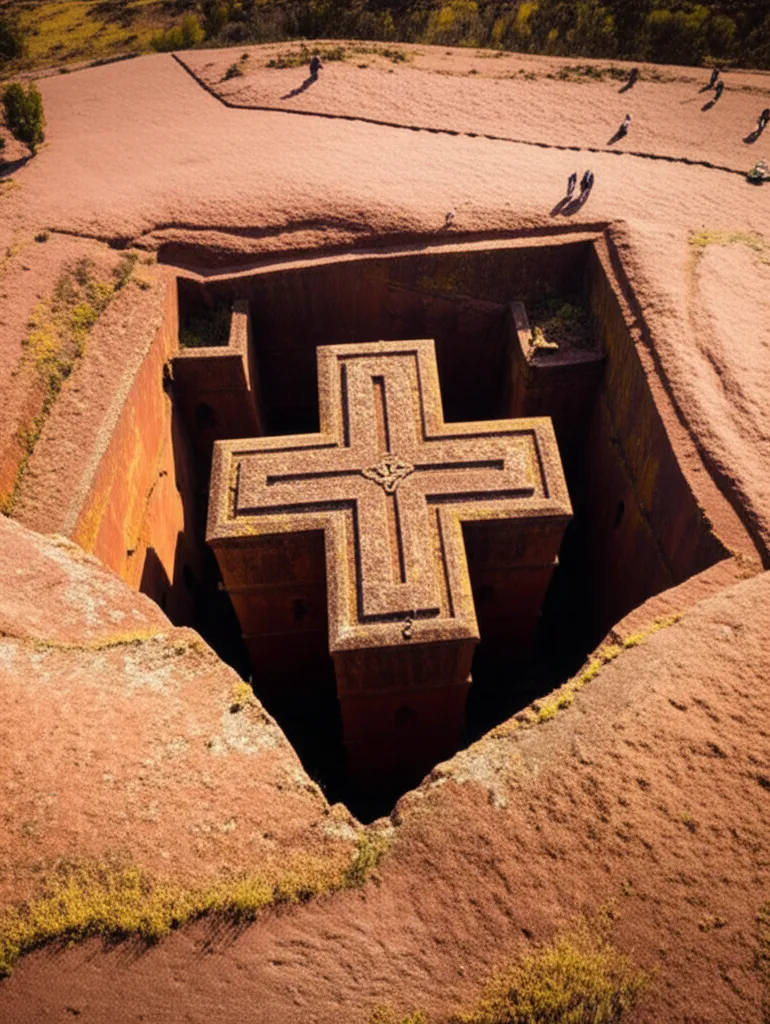
In the mountains of northern Ethiopia lies a city of stone — not built, but carved. Eleven monolithic churches, hewn from living rock, descend into the earth like inverted cathedrals. This is Lalibela, the "New Jerusalem," one of the wonders of the Christian world.
King Lalibela, inspired by a vision, commanded the construction of these churches in the late 12th and early 13th centuries. Legend says angels worked alongside human masons, laboring by night to complete what seemed impossible. The churches were carved downward — excavated from solid bedrock, with windows, doors, pillars, and vaulted ceilings all sculpted from a single piece of stone.
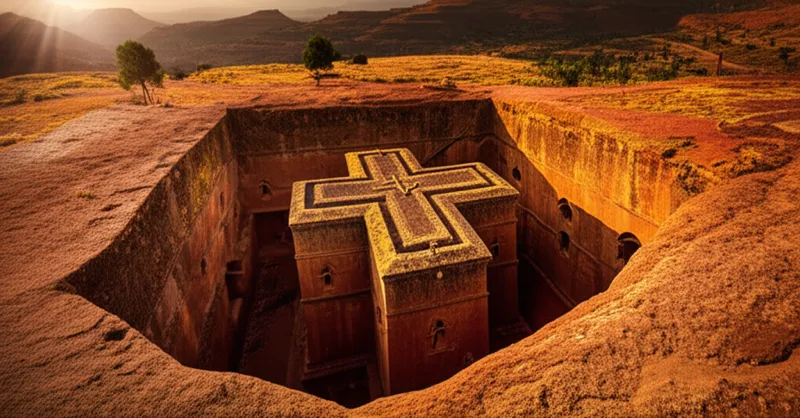
The most iconic is Bet Giyorgis (Church of St. George) — a perfect cross-shaped structure carved 15 meters deep into the ground. Viewed from above, it looks like a giant cross set into the earth, a stone prayer rising to heaven.
Lalibela was built as a pilgrimage site for those who could not travel to Jerusalem. It has its own Mount of Olives, its own River Jordan. To this day, thousands of pilgrims come during Genna (Christmas) and Timkat (Epiphany), filling the courtyards with white-robed faithful, the air thick with incense and chant.
In 1978, Lalibela was designated a UNESCO World Heritage Site. But for Ethiopians, it is not a museum — it is a living church, a place of worship, a testimony to faith that can move mountains… or carve them.
Unique Feature: Eleven rock-hewn churches carved from living stone. UNESCO World Heritage Site. Bet Giyorgis is a cruciform architectural marvel.
Lake Tana Monasteries
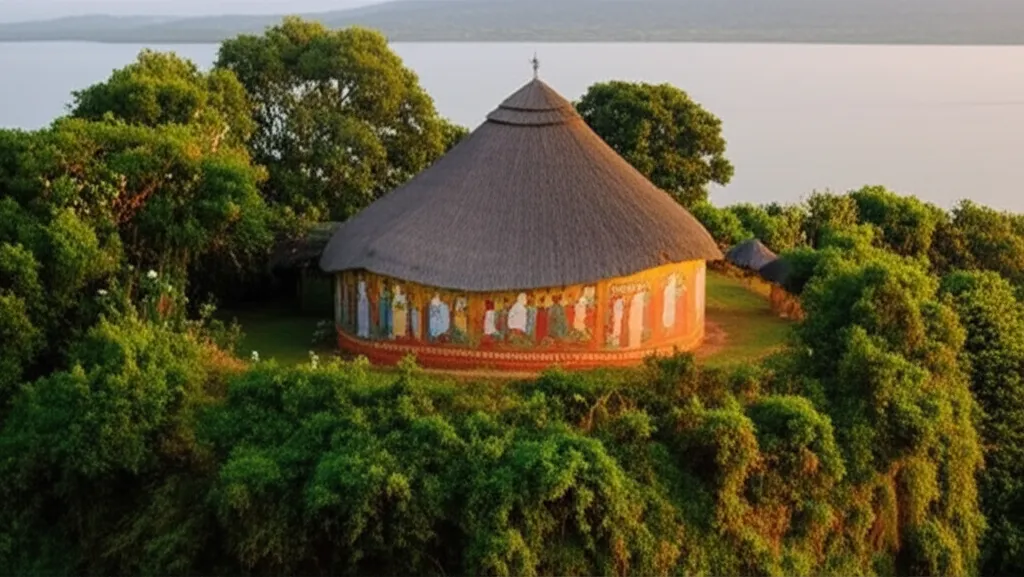
On the islands and peninsulas of Lake Tana — the source of the Blue Nile — dozens of monasteries rest in sacred isolation. Hidden among papyrus reeds and ancient trees, these island sanctuaries have served as refuges, libraries, and centers of theological education for centuries.
Among the most significant are Tana Qirqos, Daga Estifanos, Narga Selassie, and Kebran Gabriel. Each holds treasures: illuminated manuscripts, royal crowns, ancient crosses, mummified remains of emperors and patriarchs.
Legend holds that the Ark of the Covenant rested on Tana Qirqos for 800 years before being moved to Axum. Monks still guard the site with reverence, maintaining a tradition of solitude, study, and prayer that has remained unbroken since the Middle Ages.
The round, thatched-roof churches are architectural gems — their interiors adorned with vivid frescoes depicting biblical scenes, saints, angels, and the life of Christ. The colors remain bright after centuries, protected from the elements by the lake's gentle climate.
Reaching these monasteries requires a boat journey across the vast waters of Lake Tana. The journey itself is a pilgrimage — a passage from the world into sacred time, where the rhythm of the oars and the lapping of water become a meditation.
Unique Feature: Island monasteries on Lake Tana. Home to royal relics, ancient manuscripts, and vivid frescoes. Legendary resting place of the Ark of the Covenant.
Debre Libanos
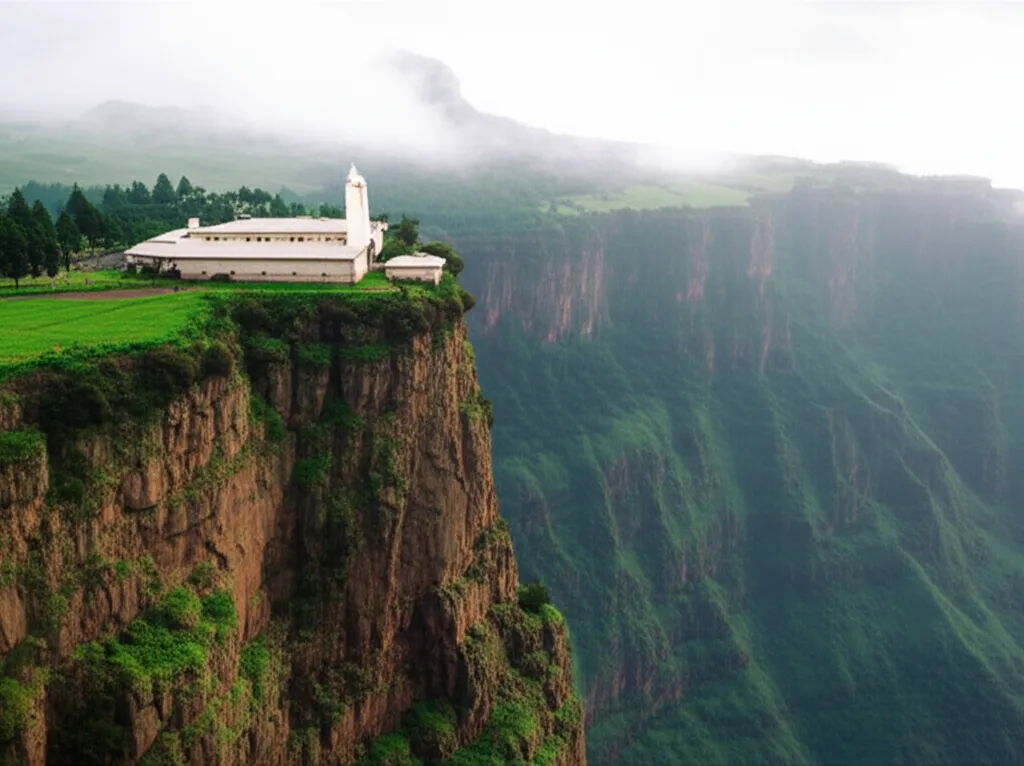
In the highlands north of Addis Ababa, surrounded by gorges and cliffs, stands Debre Libanos — the spiritual heart of Ethiopian Christianity. Founded by Saint Tekle Haymanot in the 13th century, it is the most important monastery in the Shewa region and a center of pilgrimage for millions.
Tekle Haymanot is one of Ethiopia's greatest saints. Tradition says he stood in prayer on one leg for seven years until his other leg withered and fell off. God, in recognition of his devotion, granted him six wings like the seraphim. His feast day is celebrated twice each month — a testament to his towering holiness.
Debre Libanos is not just a monastery — it is a theological powerhouse. For centuries, it has produced scholars, bishops, and spiritual leaders. Its schools taught theology, philosophy, and the sacred sciences. Monks from Debre Libanos spread across Ethiopia, founding daughter monasteries and carrying the flame of learning.
The monastery suffered a dark tragedy in 1937 when Italian forces massacred hundreds of monks and pilgrims in retaliation for resistance to occupation. The memory of that atrocity is honored every year, but the monastery endures — rebuilt, renewed, and still vibrant with life.
Today, Debre Libanos remains a place of pilgrimage. The faithful come to pray at the tomb of Tekle Haymanot, to receive blessings, to drink from the holy spring believed to have healing powers. The church complex, perched on the edge of a dramatic gorge, is a place where heaven and earth meet.
Unique Feature: Founded by Tekle Haymanot, Ethiopia's most revered saint. Spiritual and theological center of Shewa. Site of pilgrimage and learning for over 700 years.