
The Kebra Nagast ክብረ ነገሥት — The Glory of Kings
In the tenth century before Christ, when Solomon ruled in Jerusalem with wisdom unmatched among mortals, word of his glory reached across deserts and mountains to the kingdom of Sheba. There, in what is now Ethiopia and Yemen, reigned Queen Makeda — ንግሥተ ሳባ — a sovereign of beauty, intelligence, and wealth. She heard tales of Solomon's God, of his justice, of riddles no man could answer, and she resolved to see for herself whether these things were true.
The journey from Axum to Jerusalem was long and perilous. She traveled with a caravan of merchants, spices, gold, and precious stones, crossing the Red Sea and the wilderness of Sinai. When at last she stood before Solomon, she tested him with the hardest questions her scholars could devise. He answered each one. More than his wisdom, she was moved by his devotion to the God of Israel — the invisible, all-knowing Creator who dwelt not in idols but in the Ark of the Covenant, kept in the Holy of Holies.
Solomon, too, was struck by Makeda's presence. He held a feast in her honor. The meal was lavish, the wine abundant, the conversation profound. That night, by agreement or by providence — the chronicles differ — Solomon and Makeda became lovers. When she prepared to return to her kingdom, she did not know she carried within her the seed of a new dynasty. Nine months later, she gave birth to a son. She named him Menelik — ምኒልክ — which means "son of the wise man."
Menelik grew strong and clever in his mother's court, but he longed to know his father. At the age of twenty-two, he set out for Jerusalem. Solomon received him with great joy, recognized him as his firstborn son, and offered to make him heir to the throne of Israel. But Menelik loved his homeland. He asked instead for his father's blessing to return and rule Ethiopia in the name of the God of Abraham, Isaac, and Jacob. Solomon agreed — and sent with him the firstborn sons of the temple priests and nobles, to establish the faith in Axum.
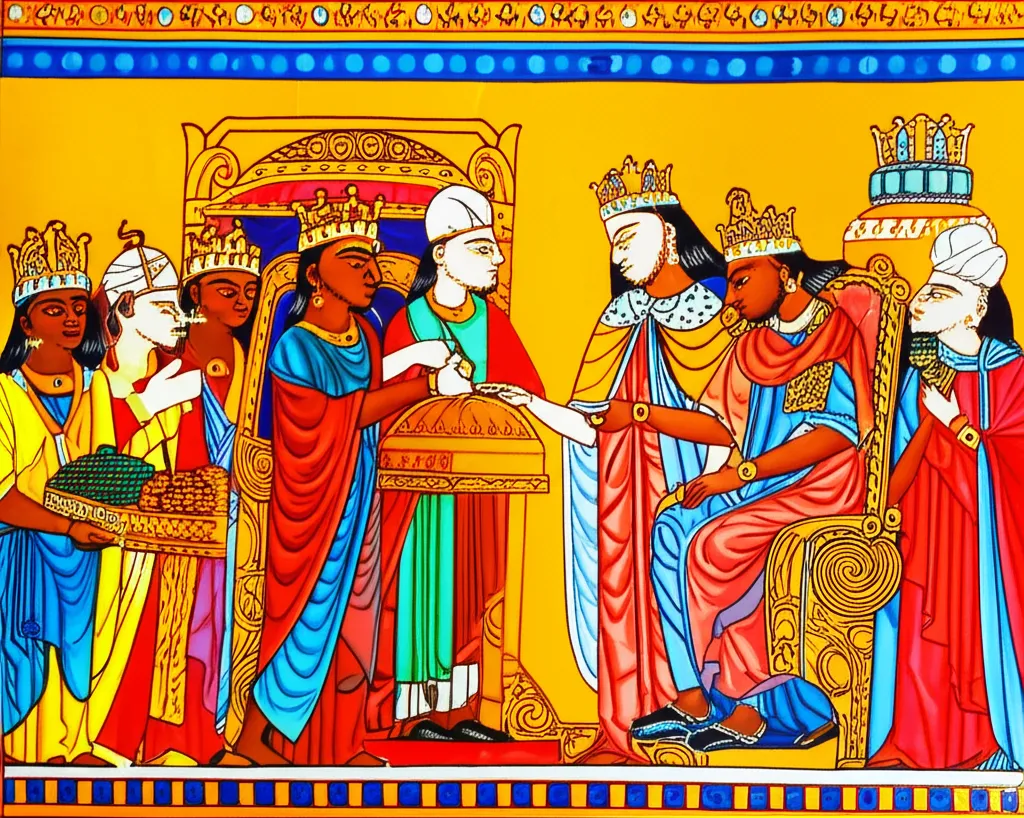
Then something extraordinary happened. According to the ክብረ ነገሥት, the Ark of the Covenant itself left Jerusalem. Some say the young priests, filled with zeal, took it without Solomon's knowledge. Others say it was an angel of the Lord who commanded it. Still others whisper that Solomon himself knew, and let it go — that the time of Jerusalem was ending, and the Ark's destiny lay in the highlands of Ethiopia. The companions of Menelik carried the sacred relic by night, crossing Egypt, sailing up the Nile, and finally ascending into the mountains of Tigray. They brought it to Axum, the ancient capital, where it has remained ever since.
The Chapel at Axum ቤተ መቅደስ ቅድስት ድንግል ማርያም ጽዮን
In the city of Axum, in the Tigray region of northern Ethiopia, stands the Church of Our Lady Mary of Zion — ቤተ መቅደስ ቅድስት ድንግል ማርያም ጽዮን. It is the most sacred site in Ethiopian Orthodoxy, the spiritual heart of the nation. Beside the church, separated by a courtyard, is a small, unremarkable chapel. It has no windows. Its door is always locked. No tourist has ever entered. No camera has ever been allowed inside.
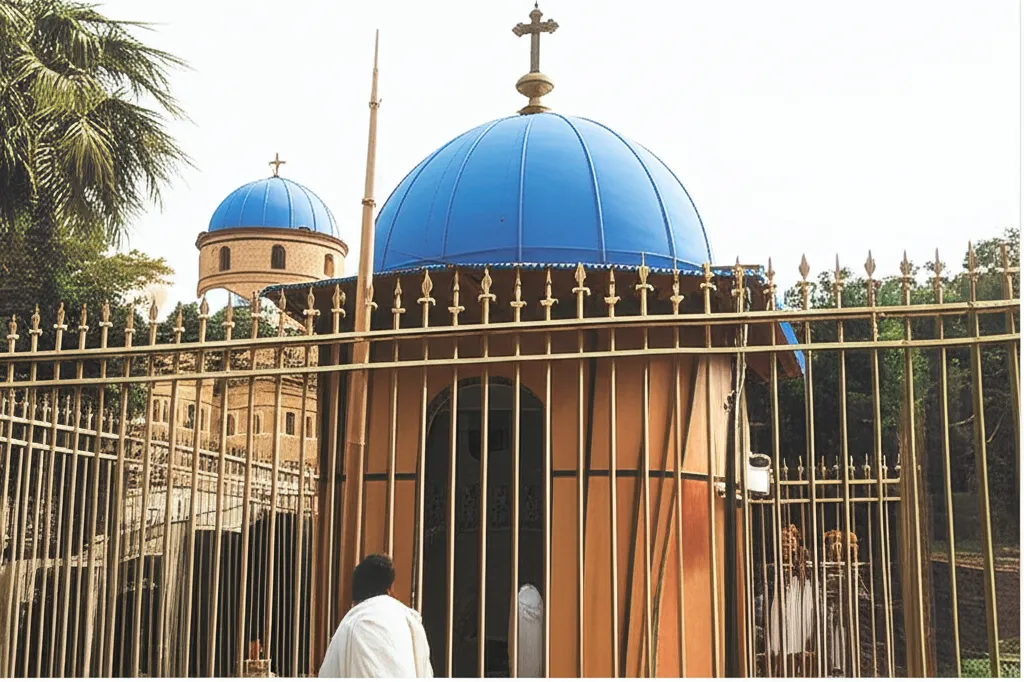
Within that chapel, according to unbroken tradition, rests the Ark of the Covenant — the gold-covered acacia chest that once held the stone tablets inscribed by the finger of God on Mount Sinai. One monk, and one monk alone, is appointed as its Guardian. He is chosen by his predecessor. Once he accepts the role, he never leaves the chapel grounds. He lives, prays, and keeps vigil beside the Ark for the remainder of his life. No emperor, no patriarch, no president of the republic may enter. He alone sees it. When he feels death approaching, he names the next guardian and passes the sacred duty into new hands. This has continued for centuries, guardian after guardian, an unbroken chain stretching back — so they say — to the time of Menelik.
The rest of the world may doubt. Scholars may debate. Archaeologists may search elsewhere. But in Axum, the matter is settled. The Ark is there. The guardian keeps watch. And the faithful believe.
The Tabot Tradition ታቦት — The Sacred Replica
Every Ethiopian Orthodox church, from the grandest cathedral to the humblest village chapel, contains a ታቦት — a consecrated wooden tablet, wrapped in silk, representing the Tablets of the Law that were kept within the Ark. It is not merely a symbol. The tabot is the church. Without it, the building is just stone and wood. The Eucharist cannot be celebrated. Baptisms cannot be performed. The structure has no sanctity. The tabot is what makes a place holy.
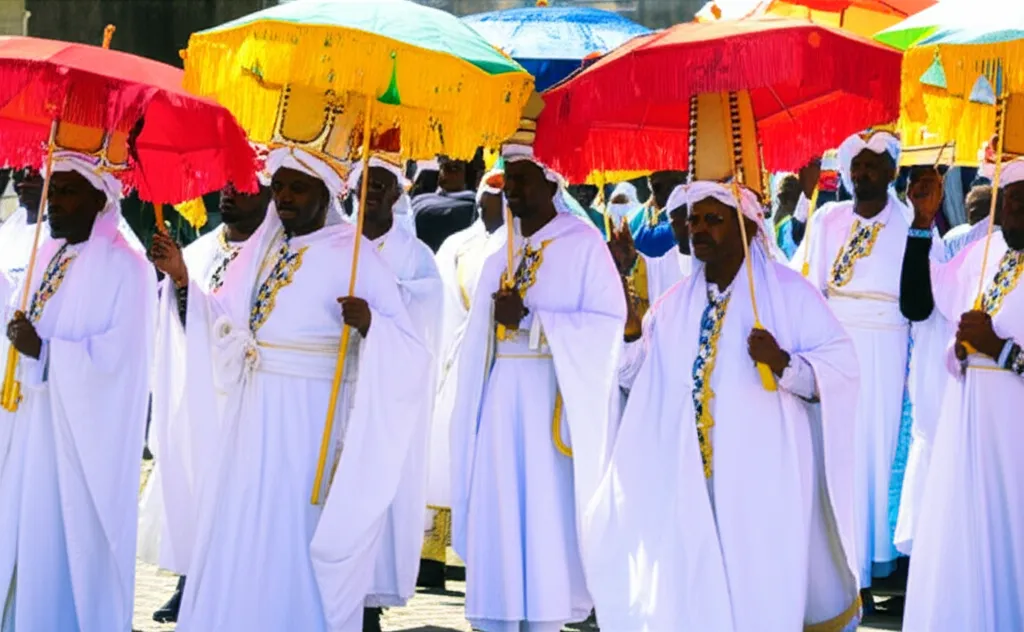
Once a year, during Timkat — ጥምቀት, the feast of Epiphany — the tabots are brought out in solemn procession. Priests lift them high, wrapped in brocade of crimson and gold, and carry them through the streets. The faithful follow, dressed in white, singing hymns, dancing, waving palm branches. Drums thunder. Sistrums chime. The procession moves to a river or pool, where the water is blessed and the baptism of Christ is remembered. The people plunge into the water, renewing their vows. At dawn, the tabots return to their churches, and the liturgy begins anew.
It is the most spectacular religious ceremony in all of Ethiopia — a living link to ancient Israel, to the Temple, to the covenant between God and His people. And every tabot, in every church, is understood as a reflection of the one true Ark, hidden in Axum, guarded by a single monk who will never speak of what he has seen.
Historical Perspectives
Historians are divided. Some view the ክብረ ነገሥት as a work of national mythology, a sacred legend crafted in the fourteenth century to legitimize the Solomonic dynasty and assert Ethiopia's place in biblical history. Others point to the undeniable antiquity of Ethiopia's Jewish practices — the observance of the Sabbath on Saturday, the dietary laws, the circumcision rites, the very architecture of Orthodox churches, which mirrors the layout of Solomon's Temple. These predate Christianity in Ethiopia by centuries. How do you explain them, if not by some ancient connection to Israel?
The Ethiopian tradition, for its part, does not waver. The Ark is in Axum. It was brought by Menelik. It has been guarded without interruption. No carbon dating, no archaeological survey, no academic consensus will alter this belief. The faithful do not require proof. They have the testimony of their fathers, the witness of the Church, the continuity of the guardian, and the living practice of the tabot in every parish across the nation.
Whether one believes or doubts, the devotion is real, the tradition is ancient, and the question remains unanswered: If the Ark of the Covenant still exists anywhere on earth — where else would it be, if not in Axum?